
Uncategorized
When to Back Yourself, or Back Away?
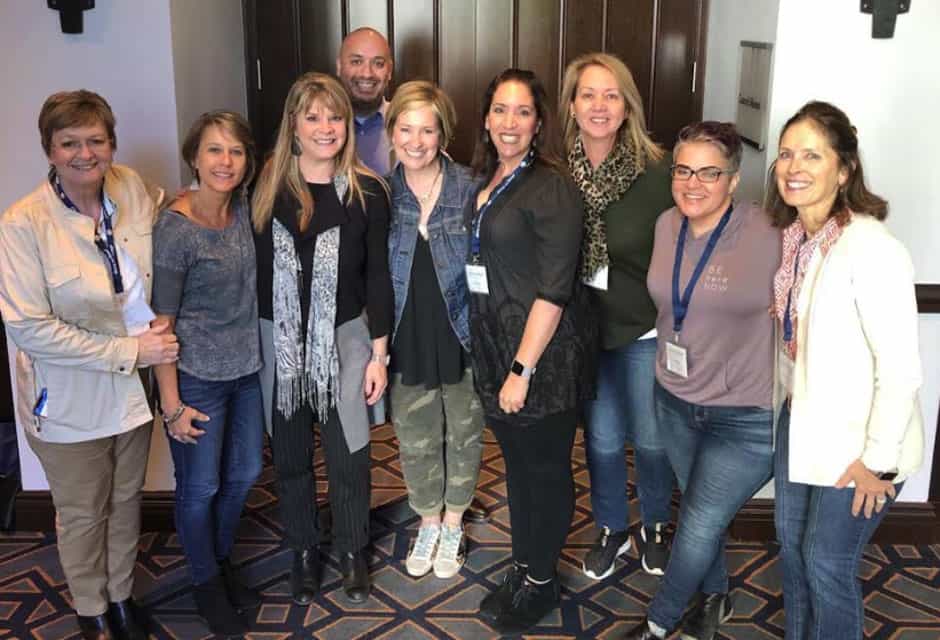
In 2019, I got on a plane to fly to the US with a knot in the pit of my stomach. I was going to

Photo by Kelly Sikkema on Unsplash
“For years, companies have been told to prepare for the future by chasing youth, digital fluency, and technical skills. They have been urged to bet on “high potentials” and to focus on the next generation.
Yet, at the same time, they have spent years overlooking one of the most strategic talent pools already available to them: women over 50.
This blind spot now looks increasingly dangerous.
The future of work is arriving amid inflation, oil crises, wars, and all sorts of geopolitical tensions, economic anxiety, demographic aging, climate disruption, and the destabilizing effects of AI. In such a world, organizations need people who can handle ambiguity, navigate transitions, sustain relationships, and make sound judgments under pressure.”
— Laetitia Vitaud, Fast Company
I read and re-read this article on the value of women over 50. I’ve sent it to countless people – both men and women – of all ages. And you know what? They all agree.
I took a deeper dive into this topic in this blog post. Here’s what the data continues to show about women over 50 in leadership—and why the organisations sidelining you are about to pay for it.
While everyone’s panicking about AI replacing workers, there’s a specific form of intelligence that becomes more valuable, not less, in an AI-saturated world: crystallised intelligence. You can read my previous blog post on this here.
This is the ability to draw on decades of experience to solve complex problems quickly. It’s pattern recognition that comes from showing up thousands of times. It’s knowing which “urgent” crisis can wait and which quiet issue is about to explode.
Women over 50 have been developing this capability for 20-30+ years! You know when the “innovative” solution being proposed is actually a rebranded failure from 2012. You can read a room, spot the power dynamics, and navigate organisational politics that would paralyse less experienced leaders.
And here’s the business case that should terrify any organisation overlooking you: emotional intelligence accounts for 58% of job performance across all roles, and 67% of leadership effectiveness comes down to EQ, not IQ.
Women consistently score higher on emotional intelligence measures than men. And emotional intelligence doesn’t peak at 35—it develops over decades of relationship management, conflict navigation, and learning to lead without formal authority.
Research shows that leaders with high emotional intelligence drive:
Brené Brown describes the foundation of courageous leadership as living with a “strong back, soft front, and wild heart.”
Strong Ground names the leadership skills essential for navigating 2026 and beyond.
“Individuals and organisations are building new muscles. Finding our strong ground—that athletic stance—is the only thing that can provide both unwavering stability in a maelstrom of uncertainty and a platform for the fast, explosive change that the world is demanding.” – Brené Brown
Here’s what organisations miss when they sideline women over 50: you’ve already built these muscles.
You’ve spent decades developing the strong back of grounded confidence and boundaries. You’ve learned to lead with the soft front of vulnerability and curiosity. And you’ve cultivated the wild heart that refuses to give in to the either/or thinking that reduces human complexity.
You didn’t learn all your current skills in a single workshop. You earned them through decades of navigating uncertainty, holding difficult conversations, adapting through change, and leading without the luxury of certainty.
Organisations aren’t looking for the “future of leadership.” They’re looking past it.
“The leadership competencies that organisations desperately need right now are the ones we’ve had to develop through decades of navigating male-dominated workplaces, managing with limited authority, leading through influence rather than position, and adapting to organisational changes you didn’t choose.”
Women in their late 40s or 50s have been living the “future of work” for decades.
Before anyone was discussing non-linear careers, most women were already navigating them. Career interruptions, pivots, caregiving breaks, part-time stints, reinventions, reentry—this wasn’t career mismanagement. This was forced adaptability.
And now?
In an economy where linear careers are dead, where everyone’s expected to pivot constantly, where “agility” and “task switching” continue to be the word of the day… You’re the expert everyone else is trying to become. You know how to:
These are evidence of resilience that can’t be taught in leadership development programs.
Australian research on women in disaster recovery found that women consistently took leadership roles in community rebuilding, relationship management, and long-term resilience work—often without formal authority or recognition.
The same pattern shows up in organisational crises: women over 50 are disproportionately the ones holding teams together, maintaining institutional knowledge, and doing the invisible emotional labour that keeps operations running.
That’s not a coincidence.
Here’s a data point that should wake up every board and C-suite: Research shows men tend to increase risk-taking under stress, while women decrease risk-taking in similar situations—and this improves decision-making performance.
In crises, in volatile markets, in high-stakes decisions where the stakes are real, you don’t want the leader who feels compelled to look decisive by taking bigger risks.
You want the leader who’s seen enough cycles to know when to pull back, when “decisive action” is actually panic, and when the bold move is to wait and gather more information.
Women over 50 bring this to the table by default. Not because you’re risk-averse—but because you’ve learned the difference between real risk and performance risk.
You’re not trying to prove you belong in the room anymore. You’re trying to make the right call.
That clarity is worth its weight in gold.
Let’s talk about money, since apparently that’s what finally gets attention.
According to the Workplace Gender Equality Agency in Australia, today:
Organisations are hemorrhaging capability by sidelining women over 50.
The McKinsey “Women in the Workplace” research shows that women reach executive leadership roles seven years later than men—and once there, 41% of senior women report being pressured to retire early or demoted under the guise of “work-life balance.”
What’s the cost of that?
According to a recent estimate, each person leaving a business costs companies at least 50 per cent of the employee’s annual salary.
Think about that for a moment. But that’s not even the real cost.
The real cost is strategic. Organisations that exclude women over 50 from decision-making are:
No one wants to be a diversity checkbox, but rather a strategic asset they can’t afford to lose.
Let’s be extremely clear about your value:
Here’s what smart organisations should be asking themselves right now:
“In a world of increasing volatility, complexity, and change—in an economy disrupted by AI, climate crisis, geopolitical instability, and demographic shifts—can we really afford to sideline the demographic that’s already proven they can navigate all of that?”
The answer is no.
But it’s happening all the same.
Not because you’re less capable. Because organisational bias often runs so deep that competence becomes invisible the moment you stop performing youth.
You have three choices:
You can keep working twice as hard to get half the recognition. You can keep watching less experienced people get promoted past you. You can keep being the one who holds everything together while someone else gets the credit. That’s exhausting, and you know it.
Some organisations get it. Some leaders understand that experience, emotional intelligence, and resilience are exactly what they need right now. Those organisations exist. The question is whether you’re willing to find them—or build them.
“Here’s the truth: you don’t need anyone’s permission to lead.
You don’t need the title to have influence.
You don’t need the recognition to make an impact.”
You can lead from exactly where you are—with the clarity, wisdom, and strategic capability you’ve spent decades developing.
The question isn’t whether you’re valuable. The data proves you are.
The question is: what are you going to do with that value?
Lead with Courage specialises in developing the exact leadership capabilities that women over 50 have spent decades building: navigating ambiguity, leading with vulnerability and strength, having powerful conversations, and stepping into influence without waiting for permission.
Our Dare to Lead™ program, based on Brené Brown’s research, gives you the frameworks, community, and tools to leverage your strategic value, regardless of whether your current organisation recognises it yet.
Because you don’t need their validation. You need your own courage.
In 2019, I got on a plane to fly to the US with a knot in the pit of my stomach. I was going to

Photo by NASA on Unsplash “In going the furthest from the world than anyone has ever been, you actually brought us back to ourselves.” —