
Values are tested at the point of refusal
Your values aren’t what you stand for. They’re tested at the point of refusal: what you refuse to do when standing firm costs you something.
Your values aren’t what you stand for. They’re tested at the point of refusal: what you refuse to do when standing firm costs you something.
That’s the idea at the heart of a new Harvard Business Review piece by fellow Aussie Margie Warrell and behavioural scientist Nick Hobson, Will Your Organization Stand By Its Values—Even When It’s Hard? I’ve admired Margie’s work on courage for years, but this piece struck me right between the eyes.
Margie and Nick argue that the real power of values sits in the lines we won’t cross, even when crossing them would be easier, cheaper or more popular.
Too often, corporate values are treated as a list of aspirations: integrity, respect, innovation, care. As the values work in Dare to Lead shows, those words can look powerful on a hallway poster. The real question is what they mean once they’re operationalised, and what they mean to the people who work there.
I’ve been revisiting my own values lately. I’m in the middle of a house renovation, so my laptop screen is often covered in builder’s dust, and I’m in a slight state of disarray along with it. And yet I feel more deeply connected to myself and my work than ever.
One of my core values is learning. Even though this isn’t my first renovation, I’m reconnecting with that feeling of lighting up when I’m living it. I’m learning patience, learning to trust the process, and learning to stay calm in the face of chaos. It reminds me that when I’m not learning, I’m not at my best, personally or professionally.
The refusal framework offers leaders three tools for turning values from words into behaviour. Here’s how I’d put them.
That third point is the one I want to sit with. Because the stories we tell about refusal are how values travel, across teams, across years, and sometimes across generations. Let me share a story from my own family that I’ve carried my whole life.
Most of us know the von Trapp family through The Sound of Music: the hills, the songs, the escape over the mountains. Fewer people know that, after the war, the Trapp Family Singers toured Australia in the 50s, travelling town to town and singing in halls far from the big cities.
One of those places was the Warrumbungles, in north-west New South Wales. A small farming community, Loch Lomond, a long way from Salzburg, but right near my grandparents’, Don and Kath Sullivan’s, farm. And two of the von Trapp boys stayed with them.
I’ve always loved that picture: a family who’d walked away from everything they owned, sitting at a country kitchen table, swapping stories with Aussie farmers.
What strikes me now, reading Margie’s article, is that the von Trapp story is a refusal story.
The real Captain von Trapp turned down a commission in the navy. The family declined to sing for the regime. They chose to leave their home, their estate and their country rather than compromise who they were. That’s a line drawn and held at enormous cost.
The line that came down through my family from those visits was this:
“Get as much education as you can, because it’s something that no one can take away from you,” – written in a letter to my uncle from one of the Von Trapps.
Think about who was saying it. People who had lost their home, their fortune and their country. Everything that could be taken had been. What remained was what they carried inside: their music, their learning, their faith, their values.
That’s the third tool from the framework in action. A story about refusal, told at a farmhouse table in the 1950s, still shaping how my family thinks about what matters seventy years later. Nobody wrote it in a values statement. It lasted because it was lived and then told.
Most of us won’t face a choice as stark as the von Trapps’. Our tests are smaller and more frequent: the deadline that tempts a shortcut, the high performer whose behaviour everyone tolerates, the client who wants something we know isn’t right.
Those small compromises add up. That is how values erode, quietly and under pressure. In Dare to Lead™, we talk about choosing courage over comfort. Refusal is often what that choice looks like in practice.
Brené Brown’s work on values runs right alongside this. In Dare to Lead, she makes the distinction between professing our values and practising them. Living into our values is a verb, not a poster.
She asks leaders to do three things that I see people wrestle with in every workshop:
Put Brené and Margie side by side, and the picture gets sharper. Brené helps us know what our values look like in action. The Refusal Framework helps us know what they look like under pressure: the specific things we’ll say no to, and who has our back when we do.
A few questions to take into your next team meeting:
Every team has a song it won’t sing. The question is whether everyone knows the words.
If you’d like to build that kind of clarity and courage in your team, see our leadership programs where we learn how to: name values, rumble with the hard conversations, and hold the line with care. Get in touch to bring the program to your organisation.
Read the full article on Harvard Business Review.
Tammy Coggan is a certified Dare to Lead™ and Emotional Agility® facilitator and the co-founder of Lead with Courage.
Your values aren’t what you stand for. They’re tested at the point of refusal: what you refuse to do when standing firm costs you something.
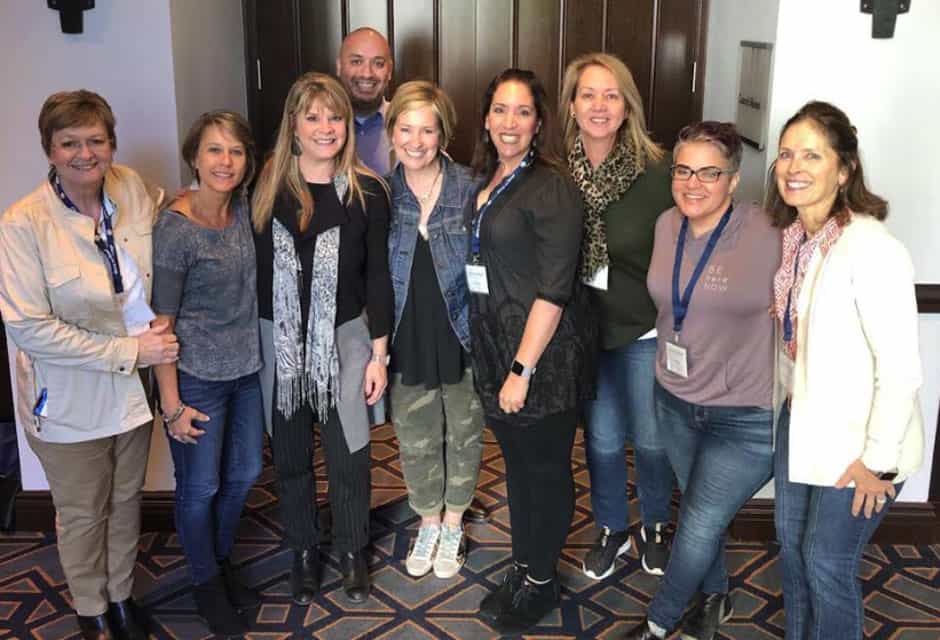
In 2019, I got on a plane to fly to the US with a knot in the pit of my stomach. I was going to